Authorized AMSOIL Dealer
Joseph Feghali
Miami, FL

1982 Ford Thunderbird 4.2L Oil Type and Capacity

Free Vehicle Maintenance App

For cars, trucks, ATVs & more

Track oil changes, save service records, and get maintenance reminders.

Keep your maintenance history handy for your next service.

Your Vehicle's Information

Year:

1982

Make:

Ford

Model:

THUNDERBIRD

Engine Size:

4.2L

Engine #:

[D]

Recommended Synthetic Oil for a 1982 Ford Thunderbird 4.2L

Product Name Product Description Capacities Product
Signature Series 5W-30 Synthetic Motor Oil Save time and money and costly repairs at the auto shop! Amsoil has your back! Bullet proof your Thunderbird's engine! With filter 5.1 quarts After refill check oil level. ASLQT-EA
Signature Series 5W-30 Synthetic Motor Oil ASLQT-EA
Add To Cart
Add To Cart
XL 5W-30 Synthetic Motor Oil Protect your Thunderbird with the best synthetic oil! Amsoil backs up all claims with proof! Support American Oil! With filter 5.1 quarts After refill check oil level. XLFQT-EA
XL 5W-30 Synthetic Motor Oil XLFQT-EA
Add To Cart
Add To Cart
OE 5W-30 Synthetic Motor Oil AMSOIL OE Synthetic Motor Oil is specially made for the extended oil change intervals recommended for your 1982 Ford Thunderbird 4.2L. It has advanced synthetic technology that resists chemical breakdown for maximum wear protection for your vehicle which is well beyond the traditional 3,000-mile oil change interval. With filter 5.1 quarts After refill check oil level. OEFQT-EA
OE 5W-30 Synthetic Motor Oil OEFQT-EA
Add To Cart
Add To Cart

Recommended oil filters for my 1982 Thunderbird

Product Name Product Description Product
AMSOIL Ea Oil Filters This filter is for your 1982 Ford Thunderbird and is designed to last up to 25k (normal conditions) or 15k miles (severe conditions) or 1 year, whichever comes first. EAO15-EA
AMSOIL Ea Oil Filters EAO15-EA
Add To Cart
Add To Cart
WIX Oil Filter Wix oil filters for your 1982 Ford Thunderbird have extended OEM recommendations which match the drain intervals of AMSOIL XL synthetic motor oil which is 12k or 1 year, whichever is first. 51515-EA
WIX Oil Filter 51515-EA
Add To Cart
Add To Cart

Recommended transmission fluids for my 1982 Thunderbird

Product Name Note Capacities Product Description Product
Signature Series Multi-Vehicle Synthetic Automatic Transmission Fluid Automatic Transmission Fluid
(1) This specification has been updated from Mercon to Mercon V per TSB 06-14-4
3 quarts Initial Fill 4 speed AOD Total Fill 12.3 quarts
3 speed C5 Total Fill 11.1 quarts 3 quarts Initial Fill
Amsoil's Signature Series Multi-Vehicle Synthetic automatic transmission fluid is made to blow the doors off any regular or conventional ATF fluids on the market and our oil surpasses the performance needs of most vehicles. Protect your transmission and avoid costly repairs. This fluid has an advanced formula to give awesome top-notch protection under harsh operating conditions. Transmission repairs are expensive so protect your vehicle with this great fluid! ATFPK-EA
Signature Series Multi-Vehicle Synthetic Automatic Transmission Fluid ATFPK-EA
Add To Cart
Add To Cart
OE Multi-Vehicle Synthetic Automatic Transmission Fluid Automatic Transmission Fluid
(1) This specification has been updated from Mercon to Mercon V per TSB 06-14-4
3 quarts Initial Fill 4 speed AOD Total Fill 12.3 quarts
3 speed C5 Total Fill 11.1 quarts 3 quarts Initial Fill
Outsanding protection and resists varnish! Change interval based on your Thunderbird's recommendation. OTFQT-EA
OE Multi-Vehicle Synthetic Automatic Transmission Fluid OTFQT-EA
Add To Cart
Add To Cart
Torque-Drive® Synthetic Automatic Transmission Fluid Automatic Transmission Fluid
(1) This specification has been updated from Mercon to Mercon V per TSB 06-14-4
3 quarts Initial Fill 4 speed AOD Total Fill 12.3 quarts
3 speed C5 Total Fill 11.1 quarts 3 quarts Initial Fill
Awesome protection under extreme temperature! Protect heavy-duty transmissions with this made in the USA oil. Follow the service interval in your owner's manual. Protect your Ford. ATD1G-EA
Torque-Drive® Synthetic Automatic Transmission Fluid ATD1G-EA
Add To Cart
Add To Cart

Differential for my Ford Thunderbird

Product Name Note Capacities Product Description Product
SEVERE GEAR® 80W-90 (1) Identification: see upper left differential tag, code on plate at driver's door. Rear 3.6 pints
WFZ Rear 3.8 pints
WGG Rear 2.5 pints
This lube is made to exceed the requirements of equipment and all vehicles that require SAE 80W-90 viscosity. It is made with synthetic base oils and top additives without adding any wax. Amsoil Severe Gear is solid against thermal breakdown. Will give you awesome protection for bearings and gears and tough against heat which will help extend the life of your equipment and avoid costly repairs. Made in the U.S.A. AGLPK-EA
SEVERE GEAR® 80W-90 AGLPK-EA
Add To Cart
Add To Cart
SEVERE GEAR® 75W-90 (1) Identification: see upper left differential tag, code on plate at driver's door. Rear 3.6 pints
WFZ Rear 3.8 pints
WGG Rear 2.5 pints
This special formula is made for harsh operating conditions that pick-up trucks endure. Also top-notch protection for SUVs, heavy equipment, and other heavy-duty vehicles. Made in the USA. SVGPK-EA
SEVERE GEAR® 75W-90 SVGPK-EA
Add To Cart
Add To Cart
SEVERE GEAR® 75W-110 (1) Identification: see upper left differential tag, code on plate at driver's door. Rear 3.6 pints
WFZ Rear 3.8 pints
WGG Rear 2.5 pints
This is a fantastic lubricant for towing trailers, heavy duty hauling, off road driving/4x4, commercial applications, and for race enthusiasts. This severe gear lube will protect bearings, gears from friction and exceeds performance of any regular gear oil out there! Keep your truck or vehicle out of the shop and avoid costly repairs with this made in the USA lube. SVTPK-EA
SEVERE GEAR® 75W-110 SVTPK-EA
Add To Cart
Add To Cart

Recommended coolants for my Ford Thunderbird

Product Name Product Description Capacities Product
Passenger Car & Light Truck Antifreeze & Coolant maximum protection for your 1982 Ford Thunderbird under extreme temperatures and operating conditions! Lasts up to 150,000 miles or five years! (whichever comes first) ANTPC1G-EA
Passenger Car & Light Truck Antifreeze & Coolant ANTPC1G-EA
Add To Cart
Add To Cart
Low Toxicity Antifreeze and Engine Coolant Lasts in your 1982 Ford Thunderbird for up to 150,000 miles or five years! (whichever comes first). Biodegradable! ANT1G-EA
Low Toxicity Antifreeze and Engine Coolant ANT1G-EA
Add To Cart
Add To Cart

Maintaining Lubrication Standards for the 1982 Ford THUNDERBIRD 4.2L

Proper engine maintenance for a vehicle of this era requires a focus on consistent monitoring and adherence to specific fluid requirements. For owners of a 1982 Ford THUNDERBIRD equipped with the 4.2L engine, staying ahead of routine service tasks can help ensure the longevity of the powertrain and overall mechanical health.

Monitoring Fluid Integrity and Condition

A primary aspect of maintaining an older vehicle is the regular observation of fluid condition. Engine oil serves as a vital medium for managing heat and reducing friction within the engine block. Over time, even with regular changes, oil can undergo chemical changes or become contaminated by various factors. When performing routine checks, it is useful to observe the color and consistency of the lubricant. While some darkening is expected as the oil performs its duties, significant changes in appearance or a gritty texture may warrant closer inspection. Furthermore, monitoring for any signs of unusual consumption is a practical way to gauge engine health. If you notice that the oil level on the dipstick is dropping more rapidly than anticipated between service intervals, this can be an indicator that the engine requires professional diagnostic attention. Beyond just checking levels, looking for external evidence of seepage is essential. Inspecting the area around the engine for any signs of wetness or residue can help identify where gaskets or seals might be losing their effectiveness. Addressing minor seepage early can prevent more significant issues later on.

Practical Inspection Priorities for Aging Components

As vehicles age, certain components naturally become more sensitive to environmental factors and usage. For a 1982 Ford THUNDERBIRD, maintenance should transition from purely scheduled tasks to condition-based monitoring. This means looking at the actual state of parts rather than relying solely on the number of years since the vehicle was manufactured. If equipped, inspecting accessible drive belts is a prudent part of any service routine. Look for signs of surface cracking, glazing (a shiny appearance), or fraying along the edges. Similarly, if the vehicle has various rubber hoses present, check them for excessive softness, hardening, or visible bulging. These components are subject to heat cycles that can eventually compromise their structural integrity. Electrical connections and wiring harnesses should also be examined. Over several decades, insulation can become brittle, and connectors may develop corrosion. Ensuring that electrical paths remain clean and secure helps prevent intermittent issues with various engine-related sensors or accessories.

Establishing a Reliable Maintenance Baseline

For many owners of classic or older vehicles, the complete service history might not always be available. In these instances, the first step in effective ownership is establishing a maintenance baseline. This involves performing a thorough inspection of all major fluid systems and mechanical components to determine their current state. If you are unsure when the oil was last changed or when various filters were replaced, treating the current service as a "reset" point is highly beneficial. Documenting these initial findings—such as the condition of the belts, the clarity of the fluids, and any existing minor leaks—provides a reference point for all future maintenance. Keeping a detailed log of every service, including the date, mileage, and specific products used, is one of the most effective ways to manage an older vehicle. This record-keeping allows you to identify patterns, such as how quickly certain components wear or how frequently fluids need to be topped off, enabling more informed decision-making during future repairs.

Identifying Potential Operational Warning Signs

While many maintenance tasks are proactive, being able to recognize when a vehicle is signaling a problem is crucial for preventing damage. It is important to remember that various symptoms can have multiple underlying causes, so an unusual observation should be treated as a prompt for investigation rather than a definitive diagnosis. For example, if you notice any changes in how the engine sounds during operation, such as new or rhythmic noises, this warrants a professional inspection. Similarly, any unexpected odors—particularly those suggesting something is contacting a hot surface—should be investigated immediately. If the vehicle's dashboard displays any warning indicators related to the lubrication system, do not ignore them. These lights are designed to alert you to conditions that could lead to mechanical issues if left unaddressed. Always treat these signals as high-priority items that require immediate attention to ensure the continued safe operation of the 4.2L engine.

Prioritizing Service Tasks Based on Condition

Effective maintenance is not about replacing every part that looks old; it is about prioritizing tasks based on actual need and risk. For a 1982 Ford THUNDERBIRD, this means distinguishing between preventive maintenance (tasks done to keep things running well) and corrective maintenance (tasks done to fix something that is already failing). When managing an older engine, prioritize addressing active leaks or significant fluid loss first. Once the vehicle's primary systems are stabilized, you can move toward more subtle preventive measures, such as cleaning electrical connectors or inspecting aging rubber components. By focusing on the most critical areas first—lubrication, cooling, and electrical integrity—you can manage the maintenance of an older vehicle in a way that is both cost-effective and technically sound. Always use your recorded maintenance history to guide these priorities, ensuring that you are not performing unnecessary work while still addressing the most pressing needs.

Practical Guidance for Buying Engine Oil for the 1982 Ford THUNDERBIRD 4.2L

When it is time to replenish your engine's lubrication, the most important step is to ensure the product matches the specific requirements of your engine. Because different engines have unique operating characteristics, you should never rely on general assumptions about what an older vehicle might need. To select the correct lubricant, match the engine oil to the application-specific viscosity information already displayed on this webpage. This ensures that the fluid provides the appropriate film strength and flow characteristics for your 4.2L engine. When shopping, pay close attention to the product labeling. You may encounter various formulations, including conventional oils, synthetic blends, or full synthetic oils. Some high-mileage oil formulations contain additives intended for use in aging engines, such as seal-conditioning additives, which some owners find useful for managing older seals. However, your primary goal should always be to satisfy the viscosity and quality standards indicated in the application information provided here. Always verify that the oil meets the appropriate API service classifications listed on the container to ensure it provides the necessary protection for your engine's components.
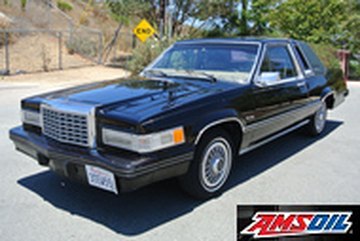
Catalog vehicle photograph for 1982 Ford THUNDERBIRD
Vehicle photograph from our catalog. Appearance may differ by model or trim.
Visit us on social media